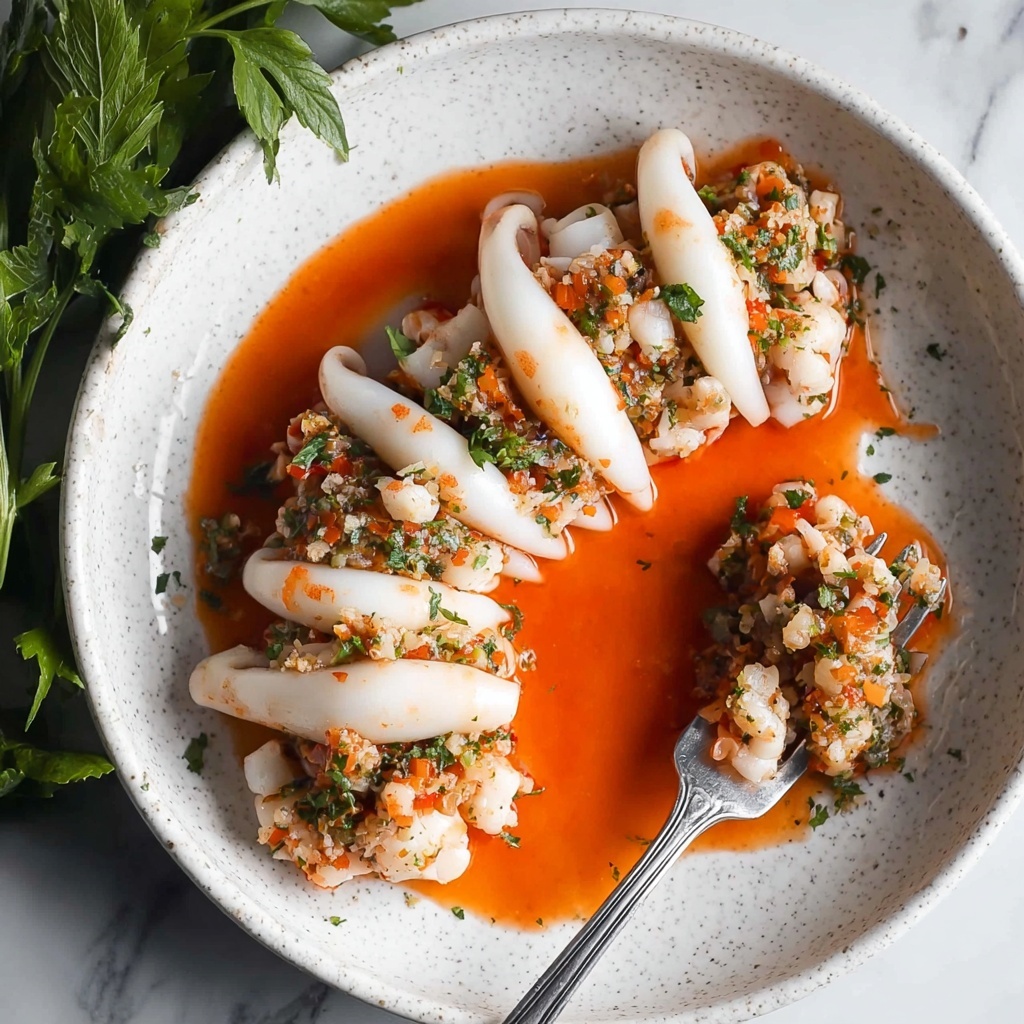
There is something truly magical about seafood that carries the soul of the Mediterranean straight to your plate, and this Greek Stuffed Calamari: A Flavorful Twist on Tradition Recipe does exactly that. With tender calamari tubes lovingly filled with a vibrant mix of aromatic herbs, savory rice, and fresh vegetables, every bite is a celebration of texture and flavor. This recipe brings together simplicity and elegance, making it a perfect dish for those who crave a comforting yet exotic meal that honors Greek culinary heritage while offering that unique, delicious twist.
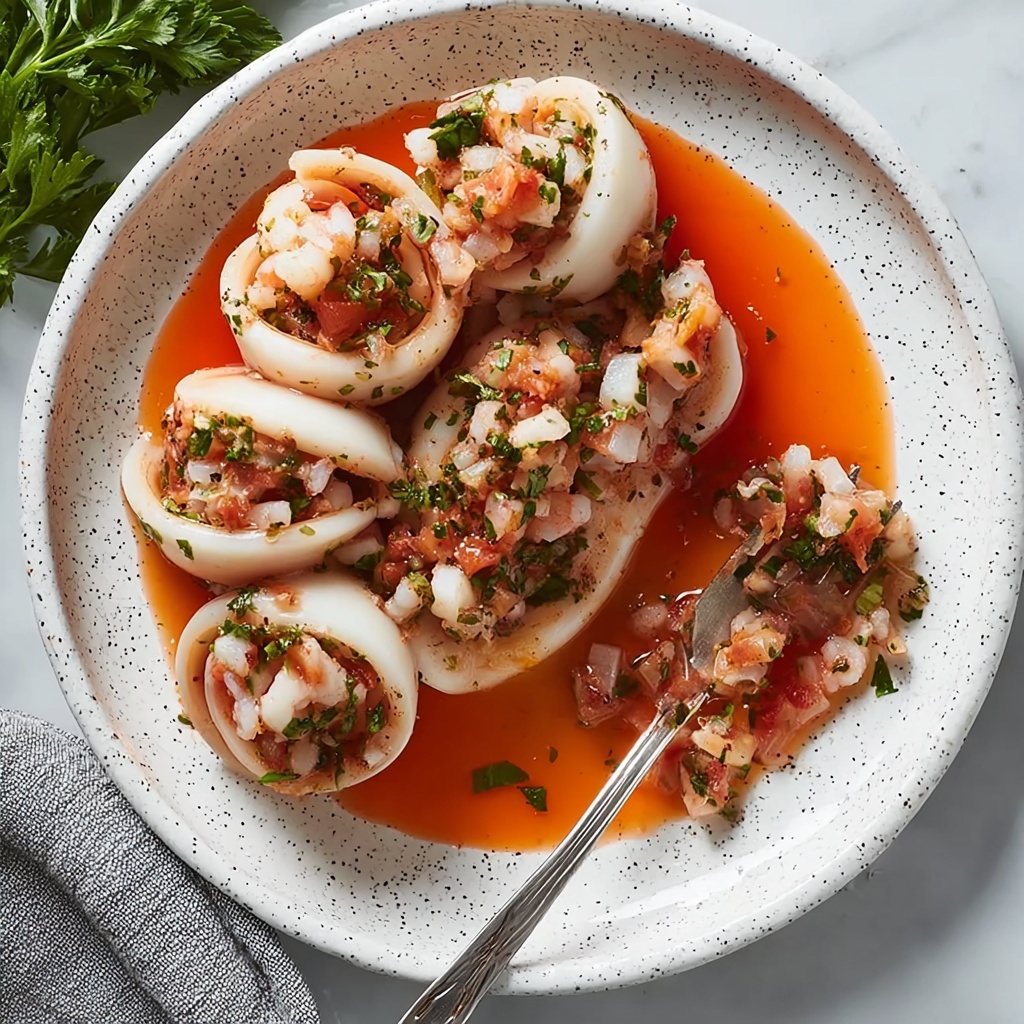
Ingredients You’ll Need
The beauty of this dish lies in its straightforward yet essential ingredients. Each element plays a crucial role: from the fresh calamari providing a silky canvas, to the fragrant herbs and vegetables that infuse the filling with brightness and warmth. Together, they create a harmonious balance of flavors and colors that make this recipe truly stand out.
- 8 pieces Whole Calamari Tubes (cleaned): The star of the dish, providing tender texture and an ocean-fresh flavor.
- 2 tablespoons Olive Oil: Perfect for sautéing and adding richness without overpowering the other ingredients.
- 1 medium Onion (diced): Gives a subtle sweetness and depth to the filling as it softens.
- 1 medium Grated Carrot: Adds natural sweetness and a pop of orange color that livens up the mixture.
- 1 medium Tomato (grated, skin discarded): Brings juiciness and a gentle acidity to balance the flavors.
- 2 tablespoons Chopped Dill: Offers a delicate, fresh herbal note that is quintessentially Greek.
- 2 tablespoons Chopped Parsley: Adds brightness and a fresh green earthiness.
- 1 teaspoon Dry Oregano: Imparts a warm, slightly peppery flavor reminiscent of Mediterranean coasts.
- 1 cup Medium Grain Rice: The filling’s hearty base that soaks up all the wonderful flavors while providing substance.
- 1/2 cup White Wine (or clam juice/water): Enhances the depth and complexity of the filling with a subtle acidity (or sea essence).
- 2 cups Passata (strained tomatoes): Forms a rich, tangy sauce that comforts and enrobes the stuffed calamari.
- Salt and Pepper (to taste): Essential seasonings to bring all the flavors into perfect balance.
- 1 teaspoon Lemon Zest: Adds a fragrant citrus lift that enlivens each mouthful with freshness.
How to Make Greek Stuffed Calamari: A Flavorful Twist on Tradition Recipe
Step 1: Prepare Your Calamari
Start by rinsing your calamari tubes under cold water to remove any residual saltiness and ensure freshness. If not already cleaned, carefully remove the innards and skin for the best texture. Don’t toss the tentacles—chop them finely and set aside, as they will add wonderful flavor and chew to our filling.
Step 2: Sauté the Vegetables
In a large pot, warm 2 tablespoons of olive oil over medium heat. Add the diced onion and sauté until it becomes translucent, about 5 minutes. This gentle cooking releases the onion’s natural sweetness, setting a flavorful foundation. Next, stir in the grated carrot and cook for another 2-3 minutes, letting the flavors meld while keeping a slight crunch.
Step 3: Build the Filling Mixture
Time to bring more brightness into the pot—add the grated tomato, chopped dill, parsley, and oregano. Cook this fragrant mix for 2-3 minutes to develop the herbs’ aromas. Then stir in the medium grain rice, followed by the white wine and passata. Season generously with salt, pepper, and lemon zest to ensure every bite sings. Let it cook together for a few minutes, then set the filling aside to cool slightly so it’s easier to handle.
Step 4: Stuff and Secure the Calamari
Preheat your oven to 350°F (175°C) and lightly grease a baking dish with olive oil. Carefully spoon the filling into each calamari tube, filling them halfway to leave room for rice expansion during cooking. Use toothpicks to seal both ends so the delicious stuffing stays put, ensuring every piece remains perfectly intact.
Step 5: Bake to Perfection
Place the stuffed calamari neatly in the baking dish. Mix any remaining passata with a bit of water and pour this luscious sauce over them. Drizzle a little more olive oil on top, cover the dish with foil, and bake for 30 minutes to let the flavors marry and the calamari become tender. Remove the foil and bake for an extra 15 minutes, checking occasionally to add water if the sauce thickens—this creates a moist, flavorful finish.
Step 6: Rest and Serve
Once out of the oven, give the calamari a few minutes to rest—this keeps the filling juicy and the flavors settled. Serve warm, spooning the rich tomato sauce and any remaining filling over the plate for a truly irresistible experience.
How to Serve Greek Stuffed Calamari: A Flavorful Twist on Tradition Recipe
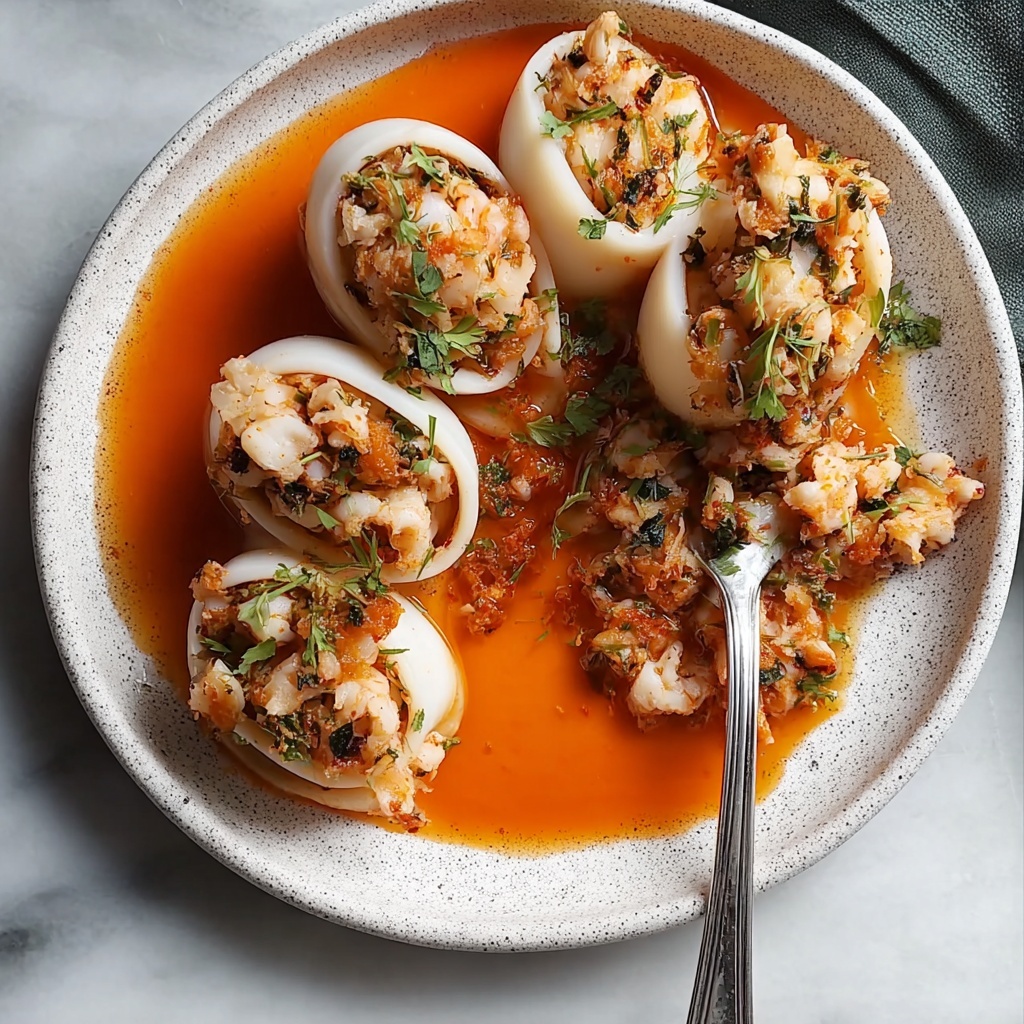
Garnishes
Brighten your presentation with a sprinkle of fresh chopped parsley or dill right before serving. A few lemon wedges on the side add a zesty punch that guests will love to squeeze over their calamari, enhancing the fresh, herbal notes that define this recipe.
Side Dishes
This Greek Stuffed Calamari: A Flavorful Twist on Tradition Recipe pairs beautifully with light, fresh sides. Think crisp green salads dressed with lemon and olive oil, a simple cucumber and tomato salad, or a side of crusty bread perfect for soaking up that luscious tomato sauce. Roasted vegetables or a creamy tzatziki can also add contrast and balance.
Creative Ways to Present
For a fun twist, serve the stuffed calamari atop a bed of fluffy couscous or alongside a vibrant Greek salad for a colorful plate. Alternatively, try arranging them as individual appetizers by slicing into rounds after baking, then garnishing with microgreens for a party-friendly presentation that’s as delightful to look at as to eat.
Make Ahead and Storage
Storing Leftovers
If you have any leftovers from this Greek Stuffed Calamari: A Flavorful Twist on Tradition Recipe, store them in an airtight container in the refrigerator. They will keep well for up to 2 days, allowing the flavors to deepen even further.
Freezing
You can freeze the stuffed calamari before baking. Wrap each piece tightly in plastic wrap and place them in a freezer-safe container or bag. Freeze for up to 1 month. When ready, thaw overnight in the fridge and then bake as instructed, adding a few extra minutes to the cooking time.
Reheating
Reheat refrigerated leftovers gently in a covered baking dish at 325°F (160°C) for about 15-20 minutes to prevent drying out. Alternatively, microwaving on medium power in short intervals works well—just be sure to keep some moisture, like a splash of water or sauce, nearby to maintain juiciness.
FAQs
Can I use short grain or long grain rice instead of medium grain?
Medium grain rice works best in this recipe because it cooks to a creamy yet slightly firm texture that holds well inside the calamari. Short grain might become too sticky, and long grain could be too dry, but you can experiment based on your preference.
Is it necessary to use white wine in the filling?
White wine adds depth and brightness to the filling, but if you prefer a non-alcoholic version, clam juice or water works perfectly. The key is to maintain moisture and a slight acidity for flavor balance.
How do I know when the calamari is cooked properly?
The baked calamari should be tender but not rubbery. Baking covered and at a moderate temperature ensures it cooks gently over time. Avoid overcooking to keep the perfect texture.
Can I prepare the filling in advance?
Absolutely! Making the filling ahead saves time and lets the flavors meld beautifully. Just cool it completely, cover, and refrigerate until you’re ready to stuff and bake.
What if I can’t find passata in my local store?
Passata is just strained tomatoes, so you can easily make your own by blending canned tomatoes and straining out the seeds and skin. Alternatively, canned crushed tomatoes can work in a pinch but may be a bit chunkier.
Final Thoughts
This Greek Stuffed Calamari: A Flavorful Twist on Tradition Recipe is a treasure that brings the warmth and vibrancy of Greek cuisine right to your dining table. Its blend of fresh herbs, hearty rice, and perfectly cooked calamari makes it a dish you’ll want to revisit often. Don’t hesitate to give it a try—you’re in for an unforgettable, soulful meal that’s as comforting as it is exciting!
Print
Greek Stuffed Calamari: A Flavorful Twist on Tradition Recipe
- Prep Time: 45 minutes
- Cook Time: 50 minutes
- Total Time: 1 hour 35 minutes
- Yield: 4 servings
- Category: Main Course
- Method: Baking
- Cuisine: Greek
Description
Greek Stuffed Calamari is a delightful seafood dish featuring tender calamari tubes filled with a savory mixture of rice, herbs, and vegetables, then baked in a rich tomato sauce. This recipe combines Mediterranean flavors such as dill, parsley, oregano, and lemon zest to create a classic yet vibrant meal perfect for family dinners or special occasions.
Ingredients
Calamari
- 8 pieces Whole Calamari Tubes (cleaned)
Filling
- 2 tablespoons Olive Oil (for sautéing)
- 1 medium Onion (diced)
- 1 medium Grated Carrot
- 1 medium Tomato (grated, skin discarded)
- 2 tablespoons Chopped Dill
- 2 tablespoons Chopped Parsley
- 1 teaspoon Dry Oregano
- 1 cup Medium Grain Rice
- 1/2 cup White Wine (or clam juice/water for non-alcoholic)
- 2 cups Passata (strained tomatoes)
- Salt and Pepper to taste
- 1 teaspoon Lemon Zest
Instructions
- Preparation: Rinse the calamari tubes thoroughly under cold water to ensure they are clean. If not pre-cleaned, remove the innards and skin carefully. Chop the tentacles into small pieces to use them in the filling mixture.
- Sauté Aromatics: In a large pot, heat 2 tablespoons of olive oil over medium heat. Add the diced onion and cook until translucent, which takes about 5 minutes. Then add the grated carrot and continue to sauté for another 2 to 3 minutes to soften the vegetables.
- Add Tomatoes and Herbs: Stir in the grated tomato along with the chopped dill, parsley, and dry oregano. Cook this mixture together for about 2 to 3 minutes to meld the flavors.
- Incorporate Rice and Liquids: Add the medium grain rice to the pot followed by white wine (or clam juice/water for a non-alcoholic version) and passata. Season with salt, pepper, and lemon zest to taste. Stir well and cook for another 2 to 3 minutes, then remove from heat and set aside to cool slightly.
- Preheat Oven and Prepare Calamari: Preheat your oven to 350°F (175°C). Grease a baking dish with olive oil. Fill each calamari tube halfway with the prepared rice mixture and seal the ends using toothpicks to prevent the filling from leaking during baking.
- Bake the Stuffed Calamari: Arrange the stuffed calamari tubes in the greased baking dish. Mix the remaining passata with some water and pour it evenly over the calamari. Drizzle additional olive oil on top, cover the dish with foil, and bake for 30 minutes. Then remove the foil and bake for a further 15 minutes, adding a splash of water if the sauce looks too thick to maintain moisture.
- Rest and Serve: Once baked, remove the calamari from the oven and allow it to rest for a few minutes. Serve warm with the tomato sauce and any remaining rice mixture for a complete and satisfying meal.
Notes
- If calamari tubes are not pre-cleaned, make sure to remove the skin and innards thoroughly for the best texture.
- The rice mixture should be slightly undercooked since it will finish cooking in the oven inside the calamari.
- Sealing the calamari with toothpicks is important to prevent the filling from spilling out during baking.
- You can substitute white wine with clam juice or water to keep the dish non-alcoholic.
- Adjust seasoning and herbs according to taste; fresh herbs can enhance flavor further.
- Keep an eye on the sauce during baking to add water if it reduces too much and dries out.