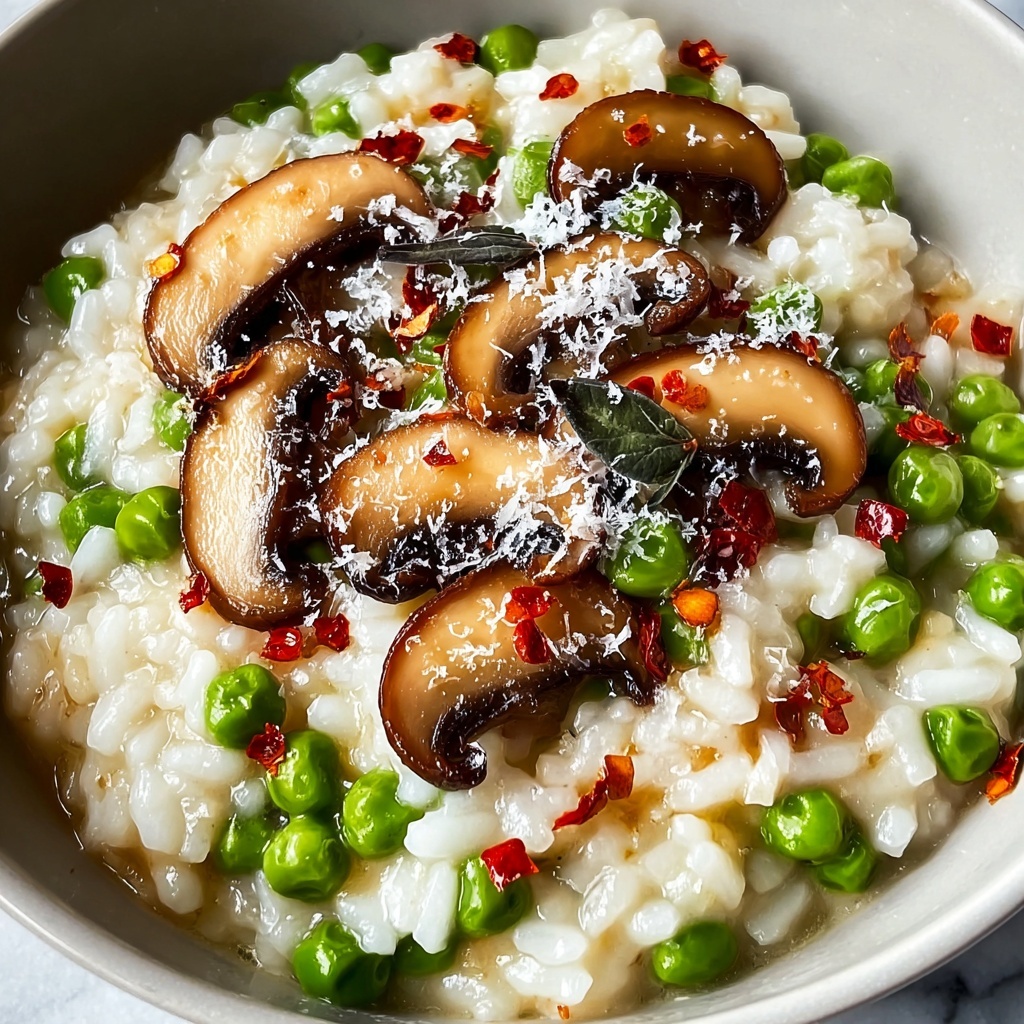
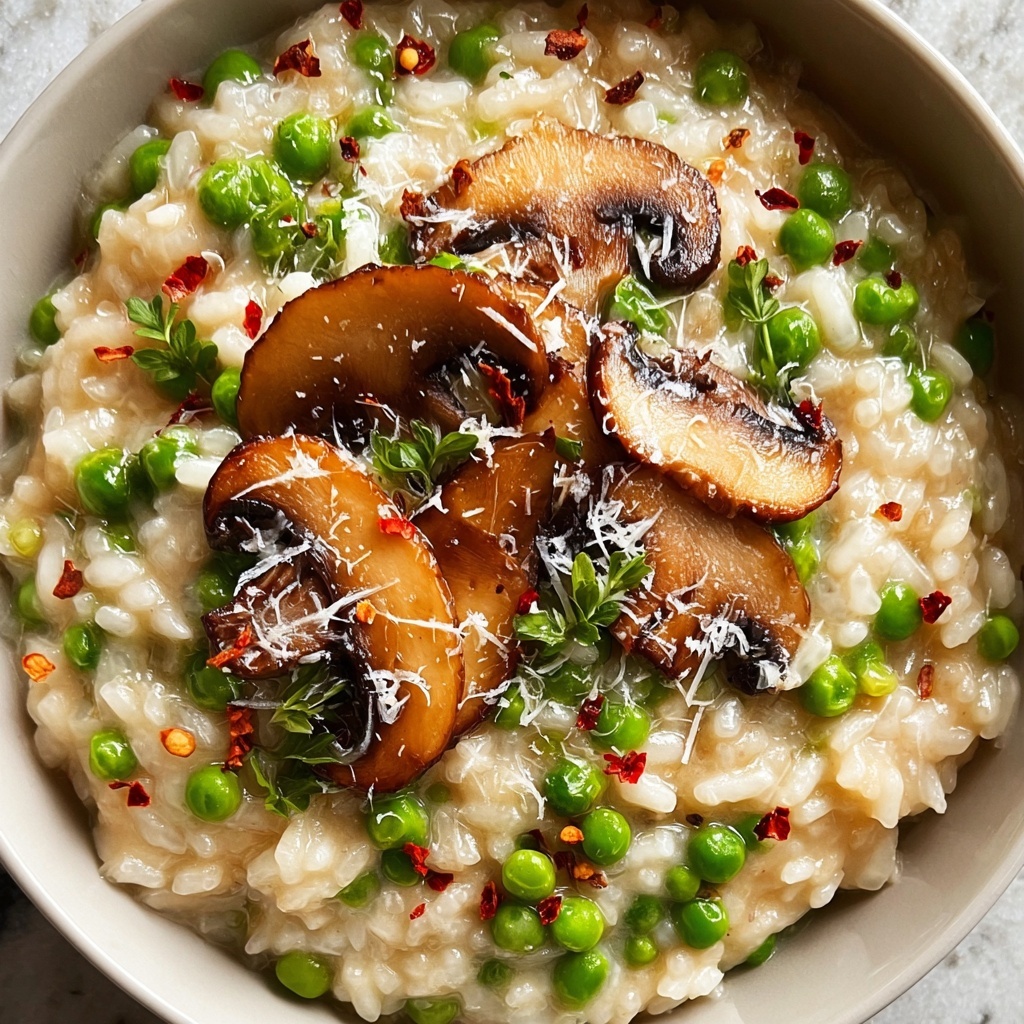
If you are craving a comforting meal that beautifully marries earthy flavors and creamy textures, this Mushroom and Pea Risotto Recipe is your go-to delight. With its rich, velvety arborio rice gently infused with sautéed mushrooms, sweet bursts of green peas, and the subtle tang of parmesan, it’s a dish that feels both indulgent and nourishing. Whether you’re cooking for a cozy weeknight dinner or impressing friends, this risotto is guaranteed to become a treasured favorite in your kitchen.
Ingredients You’ll Need
Don’t be fooled by how simple these ingredients are — each one plays a pivotal role in crafting that signature risotto texture and depth of flavor. From the hearty mushrooms adding earthiness to the bright peas providing a pop of color and sweetness, every element brings something special to the pot.
- Mushrooms (11 oz / 400g, sliced): Brown mushrooms work beautifully for an intense umami flavor and meaty texture.
- Leek (1 medium, sliced): Adds a subtle onion-like sweetness without overpowering the dish.
- Garlic cloves (2-3, diced): Infuse a fragrant, slightly spicy undertone.
- Olive oil (2-3 tablespoons): Essential for sautéing and bringing richness without heaviness.
- Arborio rice (1 ½ cups): The star grain that gives you creamy, perfectly chewy risotto.
- Dry white wine (½ cup): Adds a delicate acidity that brightens the flavors.
- Vegetable stock (6.5 cups, heated): Warm stock ensures even cooking and infusion of savory notes.
- Parmesan cheese (2 oz / 50g, grated): Mountains of flavor and creaminess, stirred in at the end.
- Frozen green peas (1 cup): For bursts of freshness and a lovely contrast to the mushrooms.
- Salt and cracked black pepper: Season carefully to highlight the natural flavors.
- Red pepper flakes (optional): For those who like a little gentle heat to balance the creaminess.
How to Make Mushroom and Pea Risotto Recipe
Step 1: Sauté the Mushrooms
Start by heating olive oil in a large pan over high heat and toss in your sliced mushrooms. Cook them until they turn a beautiful golden brown, releasing that rich, earthy aroma. Don’t forget to season with salt and pepper while they cook — this will deepen their flavor. Once perfectly sautéed, remove them from the pan and set aside to keep those browned edges intact.
Step 2: Cook the Leek and Garlic
Using the same pan, add a little more olive oil and sauté the sliced leek gently for a few minutes until softened and fragrant. Then add your diced garlic and cook together for another minute to build the foundational flavors that will infuse the rice.
Step 3: Toast the Rice
Now it’s time to invite the arborio rice into the mix. Stir it into the leek and garlic, letting it toast for a few minutes. This step is key — it helps the rice grains maintain their structure while they absorb all the delicious liquids later on. Pour in the white wine and let it simmer until nearly evaporated; this adds a subtle acidity that lifts the entire dish.
Step 4: Gradually Add Warm Stock
This part requires patience and love. Add a ladle of heated vegetable stock to the pan and stir gently but consistently. The rice will absorb the liquid slowly, releasing its starch and becoming creamy. Once most of the liquid disappears, add another ladle. Keep repeating this process for about 15 minutes until the rice is tender but still has a slight bite. Season with salt and pepper as you go to balance flavors.
Step 5: Stir in the Parmesan Cheese
When the rice is nearly done, grate in the parmesan cheese and combine it with a ladle of stock. This creates a wonderfully rich, silky texture that makes risotto so irresistible.
Step 6: Finish with Peas and Mushrooms
Gently fold in your vibrant frozen green peas along with those beautifully sautéed mushrooms you set aside earlier. Cook everything together for another minute, just until warmed through, ensuring every bite is bursting with color and flavor.
Step 7: Serve Immediately
The risotto is at its creamiest and most luxurious right when it’s freshly made. Serve straight away, perhaps with extra grated parmesan, a crack of black pepper, and if you dare, a sprinkle of red pepper flakes to tease your palate.
How to Serve Mushroom and Pea Risotto Recipe
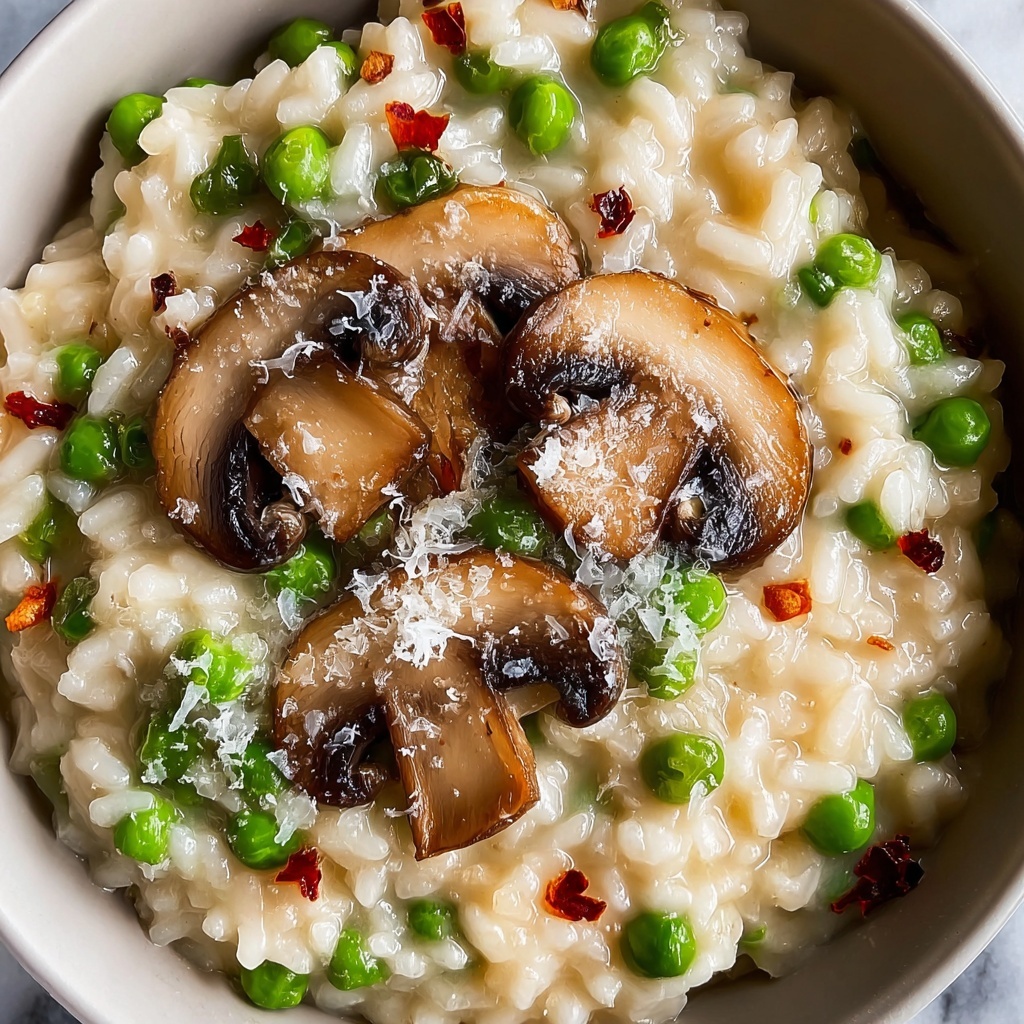
Garnishes
Simple garnishes like an extra dusting of parmesan cheese and freshly cracked black pepper elevate this dish to restaurant-quality. A light drizzle of good olive oil or a scattering of fresh herbs like parsley or thyme adds freshness and a lovely finish.
Side Dishes
This risotto shines as a standalone meal but pairs beautifully with a crisp green salad or roasted vegetables to add contrast in texture and flavor. A glass of chilled white wine alongside will complement the subtle acidity in the risotto itself.
Creative Ways to Present
For a fun twist, serve the risotto in small, warmed bowls topped with shaved parmesan and a few sautéed mushroom slices arranged artfully. You might even scoop it into hollowed-out roasted peppers or tomatoes for an impressive, edible bowl that adds another layer of flavor and color.
Make Ahead and Storage
Storing Leftovers
Risotto is best enjoyed fresh, but if you have leftovers, cool them quickly and store in an airtight container in the fridge for up to two days. Keep in mind the rice will firm up even more once chilled.
Freezing
Freezing risotto is possible but not always ideal as the texture may change. If you do freeze, portion it out and thaw overnight in the fridge before reheating to maintain some creaminess.
Reheating
When reheating your Mushroom and Pea Risotto Recipe, add a splash of warm stock or water to loosen it up. Warm gently over low heat, stirring often to avoid sticking, until heated through and creamy again.
FAQs
Can I use any type of mushrooms for this risotto?
Absolutely! While brown or cremini mushrooms provide a deep flavor, you can experiment with shiitake, porcini, or even a mix for exciting variations.
Is Arborio rice necessary for risotto?
Yes, arborio rice is the traditional choice because its high starch content creates that signature creamy texture risotto is loved for. Other short-grain rice may not yield the same result.
Can I make this dish vegan?
To make it vegan, simply omit the parmesan or replace it with a vegan cheese alternative, and use vegan stock. The risotto will still be delicious and creamy.
Do I need to stir the risotto constantly?
Stirring frequently helps release the starches from the rice, which is essential for creaminess, but you don’t need to stir non-stop. Gentle, regular stirring works just fine.
What wine pairs best with Mushroom and Pea Risotto Recipe?
A crisp, dry white wine like Pinot Grigio, Sauvignon Blanc, or Chardonnay complements the delicate flavors without overpowering the dish.
Final Thoughts
This Mushroom and Pea Risotto Recipe is a heartfelt celebration of simple, fresh ingredients coming together to create a luxurious meal that comforts and delights. I can’t wait for you to dive in, savor every creamy spoonful, and maybe even make it a part of your regular cooking rhythm. Trust me, this risotto has a special way of turning any dinner into an occasion.
Print
Mushroom and Pea Risotto Recipe
- Prep Time: 10 minutes
- Cook Time: 30 minutes
- Total Time: 40 minutes
- Yield: 4 servings
- Category: Main Course
- Method: Stovetop
- Cuisine: Italian
- Diet: Vegetarian
Description
This creamy Mushroom and Pea Risotto is a comforting Italian classic that blends earthy sautéed mushrooms, tender leeks, and sweet green peas with creamy arborio rice cooked slowly in vegetable stock. Enhanced with white wine and Parmesan cheese, this risotto recipe delivers rich, savory flavors perfect for a satisfying weeknight dinner or special occasion.
Ingredients
Vegetables and Aromatics
- 11 oz / 400g mushrooms (such as brown mushrooms), sliced
- 1 medium leek, sliced
- 2–3 garlic cloves, diced
- 1 cup frozen green peas
Liquids and Oils
- 2–3 tablespoons olive oil
- ½ cup dry white wine
- 6.5 cups heated vegetable stock
Grains and Dairy
- 1 ½ cups arborio rice
- 2 oz / 50g parmesan cheese, grated
Seasonings
- Salt and cracked black pepper, to taste
- Red pepper flakes (optional)
Instructions
- Sauté mushrooms: Heat olive oil in a large pan over high heat. Add the sliced mushrooms and sauté until they turn golden brown and have released their moisture. Season them with salt and cracked black pepper, then remove from the pan and set aside.
- Sauté leek and garlic: In the same pan, add a tablespoon of olive oil. Add the sliced leek and sauté for a few minutes until softened. Add the diced garlic and cook together briefly until fragrant.
- Toast rice: Add the arborio rice to the pan with the leek and garlic. Stir well and toast the rice for a few minutes until it becomes slightly translucent around the edges. Pour in the dry white wine and let it cook down until mostly evaporated, infusing the rice with flavor.
- Add stock gradually: Begin adding the heated vegetable stock one ladle at a time to the rice, stirring slowly and continuously. Allow each addition of stock to be mostly absorbed before adding the next ladle. Continue this process for about 15 minutes, or until the rice is tender yet firm to the bite. Season with salt and pepper as you go.
- Stir in cheese: Once the rice is nearly cooked, grate the parmesan cheese directly into the risotto and stir it through along with a ladle of stock to create a rich, creamy texture.
- Add peas and mushrooms: Stir in the frozen green peas and the sautéed mushrooms. Cook together for another minute or so until the peas are heated through.
- Serve: Remove from heat and serve immediately. Garnish with extra grated parmesan, freshly cracked black pepper, and a sprinkle of red pepper flakes if desired for a hint of spice.
Notes
- Use high-quality arborio rice for best creamy risotto texture.
- Keep the vegetable stock heated throughout the cooking process to maintain even cooking and avoid lowering the temperature.
- Stirring constantly is key to releasing the rice’s starch and achieving a creamy consistency.
- Feel free to substitute frozen peas with fresh ones when in season for added sweetness.
- If unavailable, dry white wine can be omitted or replaced with a little lemon juice for acidity.
- This dish is vegetarian, but you can make it vegan by omitting the parmesan cheese or using a vegan alternative.