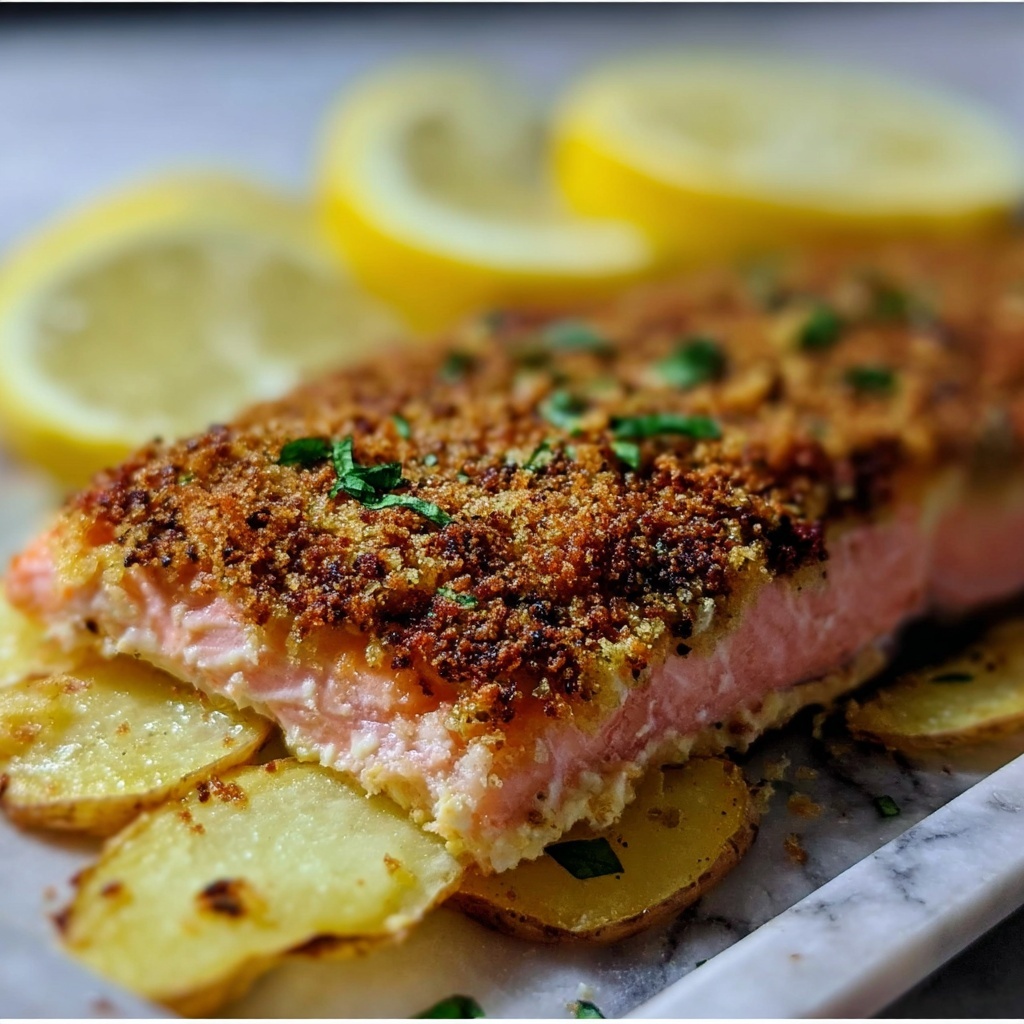
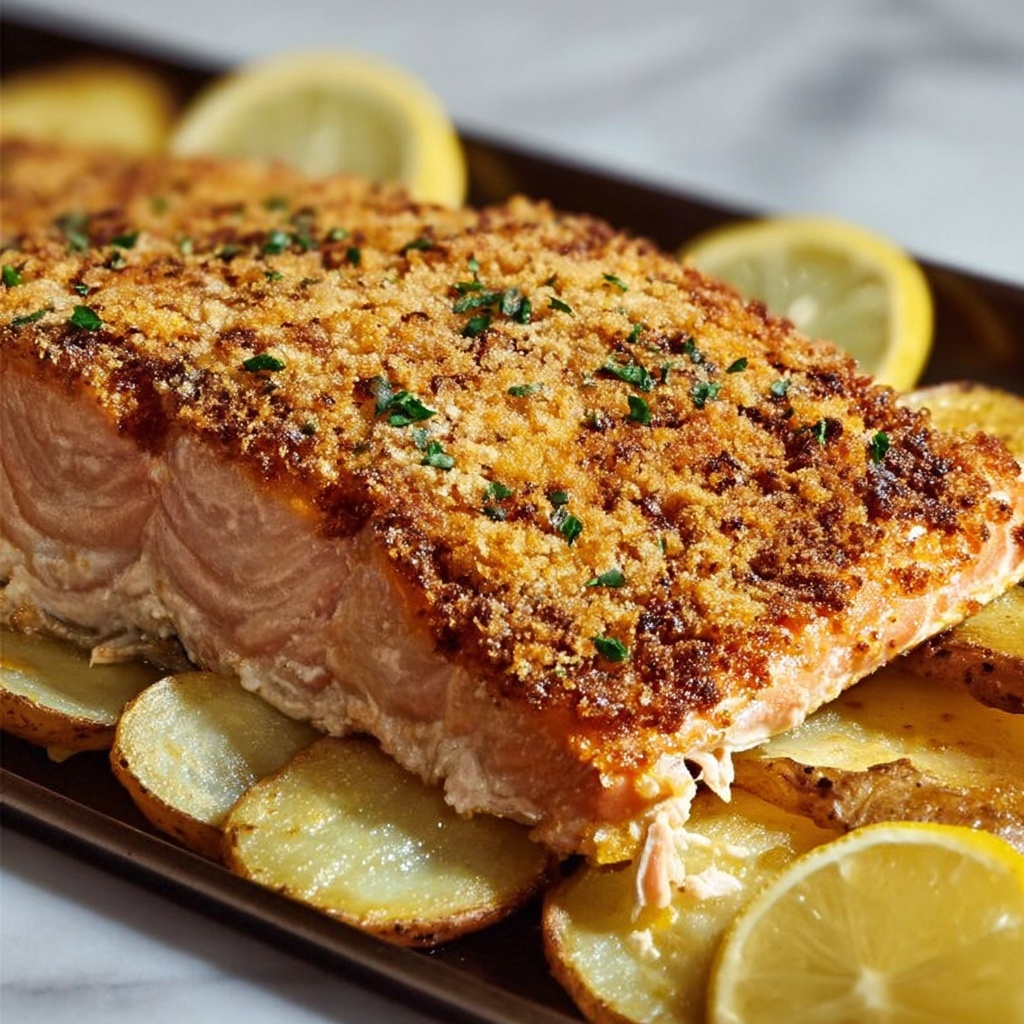
If you’re craving a dish that perfectly balances crisp texture and elegant flavor, look no further than this Potato-Crusted Salmon: A Crispy and Elegant Dinner Recipe. Imagine tender, flaky salmon topped with a golden, crunchy potato crust that delivers a delightful contrast in every bite. This dish is as stunning on the plate as it is on the palate, bringing together simple ingredients into a refined, comforting meal that feels special enough for guests but easy enough for a weeknight feast.
Ingredients You’ll Need
Every ingredient in this recipe plays a vital role in building the flavor, texture, and overall appeal of the Potato-Crusted Salmon: A Crispy and Elegant Dinner Recipe. Each element is simple yet essential, working together like a well-rehearsed orchestra to make this dish a true standout.
- Salmon fillets (4, about 6 oz each): The star of the dish, providing rich flavor and moistness.
- Potatoes (2 medium, Yukon Gold or Russet, peeled and grated): The secret to the crispy crust, adding a satisfying crunch and heartiness.
- Olive oil (2 tablespoons): Helps create that beautiful golden sear while adding a subtle fruity note.
- Dijon mustard (1 tablespoon): Adds a tangy kick and acts as a “glue” for the potato crust.
- Fresh dill (1 tablespoon chopped or 1 teaspoon dried): Provides a fresh, herbaceous lift that complements the salmon perfectly.
- Salt and pepper (to taste): Essential seasonings to enhance every layer of flavor.
- Butter (2 tablespoons): Adds richness and helps brown the potatoes beautifully.
- Lemon (1, sliced for garnish): Offers a bright, zesty finishing touch that brightens the entire dish.
How to Make Potato-Crusted Salmon: A Crispy and Elegant Dinner Recipe
Step 1: Prepare the Potatoes
The texture of your potato crust hinges on properly preparing the potatoes. Grate them finely using a box grater or food processor, then squeeze out as much moisture as possible using a clean kitchen towel. This step is crucial because excess moisture can prevent the crust from crisping up nicely. Season the grated potatoes with salt and pepper to build flavor right from the start.
Step 2: Prepare the Salmon
Patting the salmon fillets dry ensures the mustard and potatoes adhere better. Spread a thin, even layer of Dijon mustard on the top of each fillet. This not only adds a subtle tang but acts as a tasty base for the dill and potatoes. Sprinkle chopped fresh dill or dried dill over each fillet, then season the salmon with salt and pepper. This herbal seasoning pairs beautifully with both salmon and potatoes.
Step 3: Crust the Salmon with Potatoes
Take a generous handful of the grated, seasoned potatoes and press them firmly onto the mustard-coated surface of each salmon fillet. The key is to press well to create a compact potato crust that won’t fall off during cooking. This step transforms the dish from ordinary to extraordinary, setting the stage for that crispy, golden finish.
Step 4: Sear the Salmon
Heat the olive oil and butter in a large nonstick skillet over medium-high heat. This combination not only browns the potatoes perfectly but adds a nutty richness. Place the salmon fillets potato-side down into the hot skillet, and cook for 4 to 5 minutes. You’ll know it’s ready when the potatoes form a beautiful golden-brown crust that crunches with every bite.
Step 5: Finish Cooking
Carefully flip the salmon fillets over and cook the other side for an additional 3 to 4 minutes. The goal is to have fully cooked salmon that flakes easily with a fork while keeping the potato crust intact. Timing may vary slightly depending on the thickness of your fillets, but aim for juicy, tender salmon inside with a crispy, golden crust outside.
How to Serve Potato-Crusted Salmon: A Crispy and Elegant Dinner Recipe
Garnishes
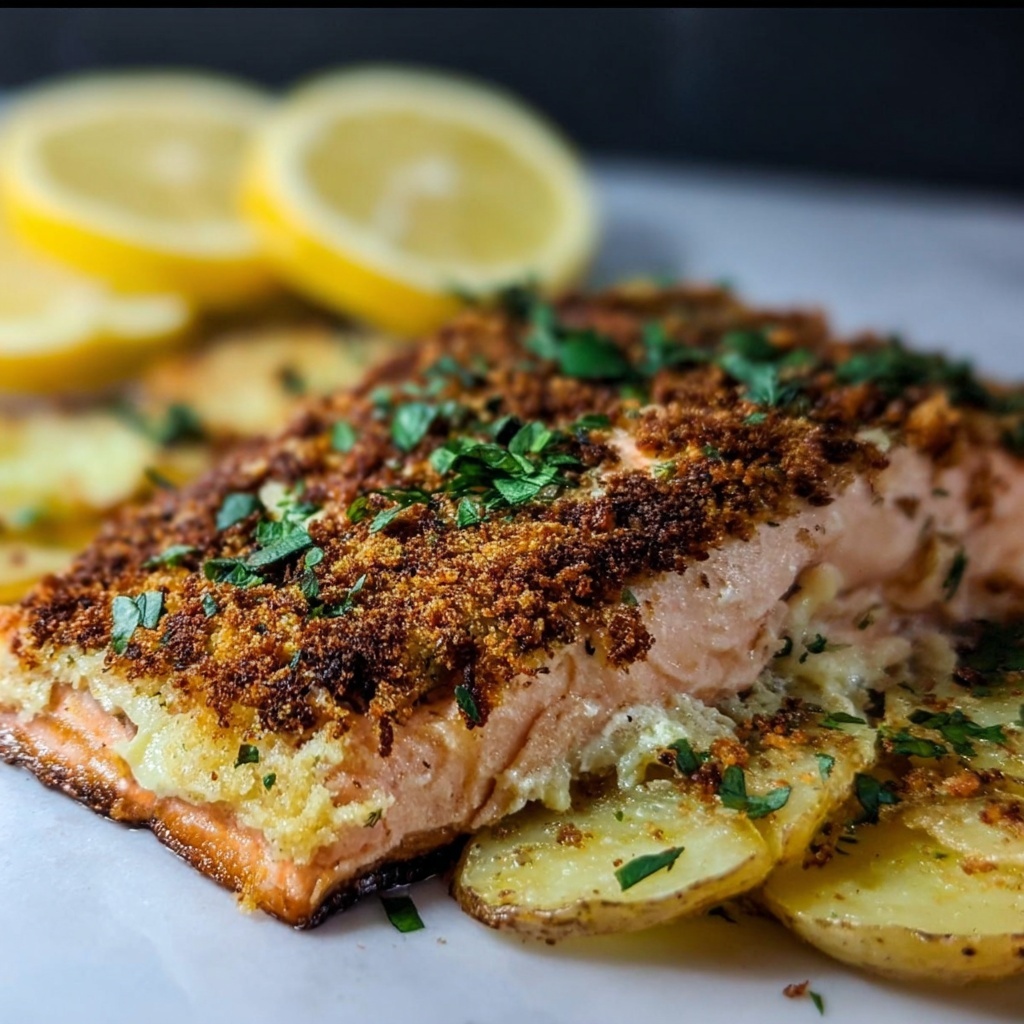
A few lemon slices tucked alongside your plated salmon bring brightness and a touch of acidity that perfectly balances the richness of the fish and buttery crust. You can also sprinkle a little more fresh dill on top for visual appeal and added freshness.
Side Dishes
This Potato-Crusted Salmon becomes a full meal when paired with light, fresh sides. Try serving it with a crisp garden salad, roasted asparagus, or sautéed green beans to keep the plate balanced and colorful. Simple roasted vegetables bring out the natural flavors without competing with the crust.
Creative Ways to Present
Add a drizzle of lemon-butter sauce or a dollop of crème fraîche infused with herbs on the side for an elegant touch. Serving the fillets stacked slightly over a bed of wilted spinach or alongside a grain like quinoa elevates the plate visually and nutritionally. The crispy potato crust creates a conversation starter you’ll be proud to share.
Make Ahead and Storage
Storing Leftovers
Place leftover Potato-Crusted Salmon in an airtight container and refrigerate for up to 2 days. To maintain the crust’s texture, avoid stacking fillets tightly. This way, your second helping stays delicious and ready to enjoy quickly.
Freezing
For longer storage, freeze cooked salmon wrapped securely in plastic wrap and placed inside a freezer-safe bag. Keep it for up to 1 month. When freezing, be mindful the potato crust may lose some of its crispness upon thawing.
Reheating
Reheat leftovers gently in a nonstick skillet over medium heat to revive the crispy potato crust. Avoid microwaving if possible, as it can make the crust soggy. A quick re-toast in the oven or pan keeps the texture just right.
FAQs
Can I use sweet potatoes instead of regular potatoes for the crust?
Sweet potatoes can be a tasty alternative, offering a touch of natural sweetness that pairs well with salmon. Just be sure to squeeze out excess moisture thoroughly to achieve a crispy crust.
Is it necessary to use Dijon mustard on the salmon?
Dijon mustard helps the potato crust stick and adds a subtle tang that brightens the flavors. If you’re not a fan, a thin layer of mayonnaise or sour cream can work as a substitute, though the flavor profile will change slightly.
How do I know when my salmon is perfectly cooked?
Salmon is done when it flakes easily with a fork and appears opaque throughout. Cooking times can vary, but typically 3–4 minutes after flipping should yield tender, moist salmon.
Can I prepare this dish for guests ahead of time?
You can prep the salmon and potato crust in advance and refrigerate for a few hours before cooking. However, it’s best to cook it just before serving to preserve the crispiness of the potato crust.
What if I don’t have fresh dill on hand?
Dried dill works well as a substitute and still imparts that characteristic flavor. Alternatively, fresh parsley or chives can add a fresh herbal note, though the taste will be slightly different but still delicious.
Final Thoughts
This Potato-Crusted Salmon: A Crispy and Elegant Dinner Recipe is a surefire way to impress yourself and anyone lucky enough to share the table with you. It transforms simple ingredients into a beautiful, satisfying meal that delivers on flavor and presentation. Don’t hesitate to try it soon — once you taste that crispy, golden crust paired with rich salmon, it just might become a new favorite in your recipe arsenal.
Print
Potato-Crusted Salmon: A Crispy and Elegant Dinner Recipe
- Prep Time: 15 minutes
- Cook Time: 10 minutes
- Total Time: 25 minutes
- Yield: 4 servings
- Category: Main Course
- Method: Frying
- Cuisine: American
- Diet: Low Fat
Description
This Potato-Crusted Salmon recipe offers a crispy and elegant dinner option featuring tender salmon fillets topped with a golden, crunchy potato crust. Enhanced with Dijon mustard and fresh dill, it’s pan-seared to perfection for a delightful contrast of textures and flavors.
Ingredients
Salmon and Potato Crust
- 4 salmon fillets (about 6 oz each)
- 2 medium-sized potatoes (Yukon Gold or Russet), peeled and grated
- 1 tablespoon Dijon mustard
- 1 tablespoon fresh dill, chopped (or 1 teaspoon dried)
- Salt and pepper, to taste
Cooking Fats and Garnish
- 2 tablespoons olive oil
- 2 tablespoons butter
- 1 lemon, sliced (for garnish)
Instructions
- Prepare the Potatoes: Grate the peeled potatoes using a box grater or food processor. Place the grated potatoes in a clean kitchen towel and squeeze out as much excess moisture as possible to ensure a crispy crust. Transfer the dried grated potatoes to a bowl and season with salt and pepper.
- Prepare the Salmon: Pat the salmon fillets dry with paper towels to remove moisture for better searing. Spread a thin layer of Dijon mustard evenly over the top of each fillet. Sprinkle chopped fresh dill or dried dill on top, then season with salt and pepper to taste.
- Crust the Salmon with Potatoes: Take a handful of the grated and seasoned potatoes and press them firmly onto the mustard-coated side of each salmon fillet, forming a compact crust. Press down well to ensure the potatoes adhere during cooking.
- Sear the Salmon: Heat olive oil and butter together in a large nonstick skillet over medium-high heat. When the fats are hot, carefully place the salmon fillets into the skillet with the potato-crust side down. Cook for about 4-5 minutes, or until the potato crust turns golden brown and crispy.
- Finish Cooking: Carefully flip the salmon fillets over and cook the other side for an additional 3-4 minutes, or until the salmon is fully cooked through and flakes easily with a fork. Adjust cooking time depending on fillet thickness to avoid overcooking.
- Serve: Plate the potato-crusted salmon fillets while hot. Garnish with lemon slices and additional fresh dill, if desired. This elegant dish pairs wonderfully with fresh salad or roasted vegetables for a balanced meal.
Notes
- Be sure to squeeze out excess moisture from the grated potatoes to achieve the crispiest crust.
- If fresh dill is unavailable, dried dill is a suitable substitute but use less to avoid overpowering the dish.
- Use a nonstick skillet to prevent sticking and to make flipping the salmon easier.
- Adjust cooking times based on the thickness of your salmon fillets to ensure even cooking without drying out the fish.
- Serve immediately after cooking for best texture and flavor.