Description
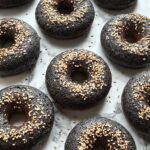
Black Russian Bagels, also known as Pumpernickel Everything Bagels, are a rich, deeply flavored bagel variety featuring a blend of cocoa, espresso, and activated charcoal powders. These bagels combine a complex, slightly bitter profile with a sweet coffee-sugar topping that adds an aromatic finish. With a chewy interior and a glossy crust achieved through boiling, they make for a sophisticated twist on traditional bagels perfect for breakfast or brunch.
Ingredients
Scale
Dough Ingredients
- 5 cups bread flour
- 2 tablespoons Dutch-process cocoa powder
- 1 tablespoon espresso powder
- 1 teaspoon activated charcoal powder
- 1 tablespoon diastatic malt powder
- 2 teaspoons kosher salt
- 2 teaspoons instant yeast
- 1 tablespoon granulated sugar
- ½ cup instant potato flakes
- 1 ½ cups warm water (110°F)
- 2 tablespoons coffee liqueur
Boiling Bath
- 4 cups water
- 2 tablespoons baking soda
Topping
- ½ cup granulated sugar
- 1 tablespoon ground cinnamon
- 1 tablespoon finely ground espresso or coffee powder
Instructions
- Mix Dry and Wet Ingredients: In a large bowl, whisk together the bread flour, Dutch-process cocoa powder, espresso powder, activated charcoal, diastatic malt powder, kosher salt, instant yeast, granulated sugar, and instant potato flakes. Stir in the warm water and coffee liqueur until a shaggy dough forms. Let rest for about 20 minutes to allow enzyme activity for better texture.
- Knead Dough: Transfer the dough to a lightly floured surface and knead for 8-10 minutes until smooth and elastic. Incorporate slap-and-fold technique for 30 seconds intermittently to build dough strength without overworking.
- First Rise: Place the dough into a greased bowl, cover, and let rise at room temperature until it expands to about 1.5 times its size, approximately 1 hour. Perform a stretch and fold halfway through to enhance dough structure.
- Divide and Rest: Gently deflate the risen dough and divide into 8 equal portions. Shape each into a round, cover, and rest for 15 minutes to relax gluten for easier shaping.
- Shape Bagels: Roll each round into an 8-inch rope, then form a circle by joining and pinching the ends together. Lightly flour hands to prevent sticking and maintain smooth bagel surface.
- Cold Proof: Place shaped bagels on a parchment-lined baking sheet, cover tightly, and refrigerate for 8 to 12 hours. This cold retardation deepens flavor development.
- Prepare Boiling Bath: Bring 4 cups of water to a gentle simmer in a large pot, then add baking soda. Maintaining a gentle simmer is key to sealing the bagels’ crust.
- Boil Bagels: Carefully lower 2-3 bagels into the simmering bath and boil for 45 seconds on each side. Remove with a slotted spoon and transfer to a wire rack. Immediately dip the tops into the coffee-sugar topping, pressing gently to adhere.
- Bake Bagels: Preheat oven to 425°F. Place boiled bagels on a parchment-lined baking sheet with space to expand. Bake for 18-22 minutes, rotating halfway through, until crust is firm and shiny.
- Cool: Transfer baked bagels to a wire rack and cool for at least 15 minutes to allow steam to escape and prevent gummy texture for easy slicing.
Notes
- Resting the dough after mixing enhances enzymatic activity that breaks down starches, improving texture.
- The use of coffee liqueur and espresso powder gives these bagels their signature robust flavor.
- Cold retardation in the fridge allows flavor development and fits easily into busy schedules.
- Boiling the bagels in a baking soda bath at a gentle simmer creates a chewy crust and glossy finish.
- Dipping bagels in coffee-sugar topping right after boiling ensures the topping sticks well and adds extra flavor.
- Cooling fully after baking is important to avoid gummy interiors.
- Use caution when boiling not to overcrowd the pot for even cooking.